
⚖️ New York Times v OpenAI: 'billions' sought, fair use claimed
The Times seeks 'billions of dollars'; OpenAI and Microsoft say training is fair use. No merits ruling appears in the record read. ⏳
 By MrMoney, business desk · Desk editor Laima Ērkšķe-Kreicberga · · 4 min read
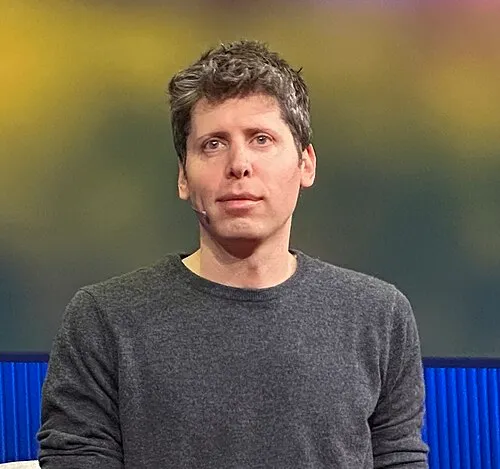 FILEDPhoto: Steve Jurvetson · CC BY 2.0
What we know
- The New York Times sued OpenAI and Microsoft on Dec. 27, 2023, in Manhattan federal court (No. 23-11195), accusing them of using millions of its articles without permission, Reuters reported.
- The Times named no figure but estimated damages in the 'billions of dollars' and asked for destruction of chatbot models and training sets that incorporate its material, per Reuters.
- OpenAI and Microsoft have said that using copyrighted works to train AI is fair use, Reuters reported; in February 2024 they called the Times's journalism-threat claim 'pure fiction', per the East Bay Times.
- The Times case now sits before U.S. District Judge Sidney Stein with other media plaintiffs, and the Justice Department has backed the fair-use defense, The Intercept reported on Sept. 2, 2026.
The New York Times sued OpenAI and Microsoft on Dec. 27, 2023, in Manhattan federal court, accusing them of using millions of its articles without permission to help train chatbots, Reuters reported. The case is New York Times Co v Microsoft Corp et al, No. 23-11195. The Times put no number on its claim. It estimated damages in the 'billions of dollars'.
The relief it wants is blunt. Per Reuters, the Times asks the court to make OpenAI and Microsoft destroy chatbot models and training sets that incorporate its material. The Verge reported that it also asks the court to stop the companies from training on its content.
The money on the table
Reuters put the stakes in context at filing: investors valued OpenAI at more than $80 billion, and Microsoft had invested $13 billion in a for-profit subsidiary, for what would be a 49% stake. The Times, Reuters noted, ended September 2023 with 9.41 million digital-only subscribers, and subscriptions generate more than two-thirds of its revenue. One side is a valuation. The other is a subscription base. Both are claims about the future.
"There is nothing 'transformative' about using The Times's content without payment to create products that substitute for The Times and steal audiences away from it,"
The New York Times, in its complaint, as quoted by Reuters, Dec. 27, 2023
The defense
OpenAI and Microsoft have said that using copyrighted works to train AI amounts to fair use, Reuters reported. On the day of filing, OpenAI said in an emailed statement that its conversations with the Times had been 'productive and moving forward constructively', and that it was 'surprised and disappointed'. Reuters said Microsoft did not respond to its requests for comment.
By February 2024 the tone had hardened. The East Bay Times reported that the two companies, responding to the Times, called the claim that generative AI threatens journalism 'pure fiction', and accused the paper of using 'deceptive' prompts to produce 'highly anomalous results'. Reuters reported that OpenAI separately accused the Times of 'hacking' its systems. The Times replied that it was 'simply using OpenAI's products to look for evidence' of reproduction of its copyrighted work.
What the record shows about training data
The complaint's evidence is outputs. Reuters reported that it cited chatbot answers containing near-verbatim excerpts, including a Pulitzer Prize-winning 2019 series on predatory lending in New York City's taxi industry and a 2012 restaurant review by Pete Wells. The Guardian reported that the suit also flagged a Bing Chat answer on 'the 15 most heart-healthy foods', where, the lawsuit claims, twelve items were not in the Times story it was credited to.
The training sets themselves are harder to see. In a separate suit by The Intercept, the complaint says the defendants 'have kept secret the specific content used to train all versions of ChatGPT beginning with GPT-4'. That is an allegation, filed Feb. 28, 2024, and not a finding.
"it would be impossible to train today's leading AI models without using copyrighted materials"
OpenAI, in a January 2024 filing to the U.K. House of Lords inquiry, as quoted by CNBC
Other cases have produced documents. Business Insider reported that unsealed filings in the Authors Guild class action show OpenAI deleted two datasets, 'books1' and 'books2'. Per OpenAI's 2020 white paper they made up 16% of GPT-3's training data, at 67 billion tokens, and the Guild's lawyers said they probably held 'more than 100,000 published books'. OpenAI's lawyers said the sets were deleted in mid-2022 because of non-use. OpenAI said the models powering ChatGPT today were not developed using them. That is the authors' case, not the Times's.
The Times has also reported on the subject itself. Its April 2024 investigation, citing people with knowledge of the matter, said an OpenAI team transcribed more than one million hours of YouTube videos in late 2021, and that president Greg Brockman personally helped collect them, according to two of the people. OpenAI told the Times that each of its models 'has a unique data set that we curate'. This is the paper's reporting about a rival. It is not a court finding.
The court record
The Times case is no longer standing alone. The New York Times reported in April 2025 that a U.S. judicial panel had consolidated several claims against OpenAI, including the Times's. The Intercept reported on Sept. 2, 2026 that the cases sit before U.S. District Judge Sidney Stein, alongside Tribune Media Company and Ziff Davis.
That filing is the newest document in the pack. The Intercept reported that the Justice Department told the court the U.S. has a 'strong interest' in a competitive AI industry, and backed OpenAI's fair-use defense. The Intercept's attorney, Matt Topic, said the department had not been privy to any discovery in the case and that its position reflects what 'Microsoft's and OpenAI's PR machines have been putting out'. The documents read contain no ruling on discovery in the Times case, so none is reported here.
One more entry for the file. In a separate authors' complaint, reported by Ars Technica, the plaintiffs say Sam Altman told Congress that 'creators deserve control over how their creations are used', and allege that he and OpenAI have 'proved unwilling to turn these words into actions'. The authors say it. OpenAI told Ars it respects the rights of writers. You can weigh the two.
Earlier on file: Judge OKs Anthropic's $1.5B authors' deal; OpenAI case waits · Musk's OpenAI suit dismissed: the jury faulted his timing
The Sam Altman file
- Reported
Sam Altman co-chaired OpenAI's nonprofit board alongside Elon Musk at its founding, per OpenAI's blog post. Musk's OpenAI suit dismissed: the jury faulted his timing
On file: The Sam Altman file · The Microsoft file · The OpenAI file · The The New York Times Company file
The Ledger
On the record
- The Times sued OpenAI and Microsoft on Dec. 27, 2023 (No. 23-11195), seeking 'billions of dollars' and destruction of models and training sets containing its material.
- OpenAI and Microsoft say training is fair use, and the Justice Department backed that position in a 2026 filing, per The Intercept.
Still rumour
- Any ruling on discovery or the merits in the Times case: not in the documents read.
- Whether Times articles sit in the training sets: the complaint alleges it, the defendants deny liability, and no court finding is in the documents read.
That's the record. The rest is rumour. - MrMoney
Next on the docket
More Business RANKEDPhoto: Mark Stebnicki · Pexels License
🤖 Judge OKs Anthropic's $1.5B authors' deal; OpenAI case waits
One court-approved payout for pirated books, one fair-use ruling on training, no merits ruling yet in the Times suit. OpenAI says its use is fair. ⏳
 Business ·
💸 Biggest Ticketmaster fee settlements: $400M tentative credit
WSJ reported a tentative $400M credit for 50M buyers; a Buffalo News column put the voucher pot at $10M. Cash deals run far smaller. ⏳
 Business ·
⚖️ Amazon Ring: FTC order seeks $5.8M over employee video access
The FTC says Ring let staff view customer videos; Ring denies breaking the law, and a judge's sign-off is unconfirmed.
 Business ·
⚖️ Nvidia China chip smuggling cases: $2.5B alleged, 9 charged
Taiwan charged nine over forged papers; the US alleges $2.5B in servers. Supermicro says it is not a target; no verdict is on record. ⏳