
🤖 Judge OKs Anthropic's $1.5B authors' deal; OpenAI case waits
One court-approved payout for pirated books, one fair-use ruling on training, no merits ruling yet in the Times suit. OpenAI says its use is fair. ⏳
 By MrMoney, business desk · Desk editor Laima Ērkšķe-Kreicberga · · 5 min read
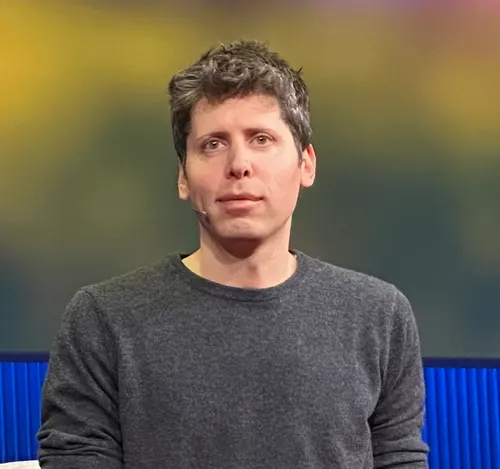 RANKEDPhoto: Steve Jurvetson · CC BY 2.0
MrMoney ranks the AI copyright cases by one test: what a court has decided, not what a complaint claims. Complaints are free to file. Orders cost money, and only one case below has a court-approved price tag.
What we know
- Judge Araceli Martinez-Olguin granted final approval on July 20, 2026 to the $1.5 billion Bartz v. Anthropic settlement, Bloomberg Law reported.
- Judge William Alsup ruled in 2025 that training Claude on the authors' books was fair use, but that downloading them from pirate libraries was not, per NPR.
- The New York Times sued OpenAI and Microsoft on December 27, 2023 in Manhattan federal court, estimating damages in the "billions of dollars"; both companies say their use is fair use, per Reuters.
- In November 2024 the court dismissed The Intercept's claims against Microsoft and let its claim against OpenAI proceed, The Intercept reported.
Bartz v. Anthropic: $1.5 billion, approved
Judge Araceli Martinez-Olguin of the Northern District of California granted final approval on July 20, 2026, Bloomberg Law reported, ending a class action over books Anthropic downloaded from the pirate libraries Library Genesis and Pirate Library Mirror. Bloomberg put the payout at about $3,100 per author across more than 480,000 works, with $122 million going to the authors' attorneys and litigation costs. Anthropic deputy general counsel Aparna Sridhar said more than 91% of covered authors and publishers had claimed their share. The Los Angeles Times reported that some 350 authors opted out, betting on bigger recoveries through individual suits.
See the receipt (opens in a new tab)Judge Alsup: training is fair use, piracy is not
In June 2025, Judge William Alsup ruled that using the plaintiffs' books to train Claude was fair use, writing that it was "exceedingly transformative", NPR reported. The same ruling held that building a central library from more than 7 million pirated copies was not, and sent that part to trial, where willful infringement could have meant statutory damages of up to $150,000 per work. Ars Technica reported that the ruling also treated Anthropic's scanning of lawfully purchased print books as fair use. That is one trial-court ruling in one case, and it is the one that put a price on the piracy.
See the receipt (opens in a new tab)"The live question in 2026 is acquisition: where the books came from, who paid for them, and what the company knew about their provenance when it hit download."
James Rubinowitz, adjunct professor at Cardozo School of Law, in a statement quoted by the Los Angeles Times
The Intercept v. OpenAI: one claim survives, Microsoft is out
In November 2024 the judge then presiding dismissed all of The Intercept's claims against Microsoft but allowed its claim against OpenAI to proceed under the Digital Millennium Copyright Act, The Intercept reported. The outlet, itself a plaintiff, says the case was later consolidated before U.S. District Judge Sidney Stein alongside the New York Times, Tribune Media Company and Ziff Davis. The complaint seeks statutory damages of no less than $2,500 per violation; no damages ruling appears in the documents read. OpenAI argues its use is fair use.
See the receipt (opens in a new tab)Silverman v. OpenAI: most of the case dismissed
Comedian Sarah Silverman and other authors sued OpenAI and Meta in San Francisco in July 2023, Reuters reported. Reuters added in December 2023 that a judge had dismissed most of that case in November. The documents read do not say what, if anything, remains.
See the receipt (opens in a new tab)New York Times v. Microsoft and OpenAI: filed, undecided
The Times sued in Manhattan federal court on December 27, 2023 (No. 23-11195), accusing the companies of trying to "free-ride on The Times's massive investment in its journalism", per Reuters. It named no specific damages figure, estimated "billions of dollars", and asked the court to order the destruction of chatbot models and training sets built on its material. OpenAI and Microsoft say training on copyrighted works is fair use; Microsoft did not respond to Reuters' request for comment at filing. In September 2026 the Justice Department filed in support of OpenAI's fair-use defense, according to The Intercept, and the documents read show no ruling on fair use.
See the receipt (opens in a new tab)Authors Guild v. OpenAI: two deleted datasets
The Authors Guild and authors including John Grisham, George R.R. Martin and Jodi Picoult sued OpenAI in Manhattan federal court in September 2023 in a proposed class action. Unsealed filings reviewed by Business Insider show OpenAI deleted two datasets, "books1" and "books2", which the Guild's lawyers said probably held "more than 100,000 published books". OpenAI told Business Insider the datasets were "last used in 2021 and deleted due to non-use in 2022" and that the models behind ChatGPT today were not developed with them. No ruling on the merits appears in the documents read.
See the receipt (opens in a new tab)Richner Communications v. Microsoft and OpenAI: newspapers file
Publishers that own and operate nearly 400 newspapers sued OpenAI and Microsoft on June 24, 2026 in the Southern District of New York (No. 1:26-cv-05320), Bloomberg Law reported. The complaint seeks statutory damages and injunctive relief. OpenAI spokesperson Drew Pusateri said, "Our models empower innovation, are trained on publicly available data, and are grounded in fair use." A Microsoft representative had not responded when Bloomberg published.
See the receipt (opens in a new tab)Music publishers v. Anthropic: the sequel
Sony, EMI and Warner Chappell sued Anthropic in August 2026, calling $1.5 billion "obviously not a large enough settlement to deter infringing conduct", Ars Technica reported. Their complaint alleges the torrenting also took sheet music and lyrics; those are allegations. An Anthropic spokesperson called it "the third lawsuit from the same lawyers, recycling allegations from cases already before the courts" and said the company will "defend ourselves robustly".
See the receipt (opens in a new tab)The ranking is short. One case has a court-approved payout, tied to how the books were acquired. The OpenAI and Microsoft cases have complaints, motions and press statements. If you are pricing them, note that Judge Alsup's training ruling came from a different court in a different case, and the documents read show no equivalent ruling in the Times suit.
Earlier on file: New York Times v OpenAI: 'billions' sought, fair use claimed · Musk's OpenAI suit dismissed: the jury faulted his timing
The Sam Altman file
- Reported
Sam Altman co-chaired OpenAI's nonprofit board alongside Elon Musk at its founding, per OpenAI's blog post. Musk's OpenAI suit dismissed: the jury faulted his timing
On file: The Sam Altman file · The Anthropic file · The Microsoft file · The OpenAI file
The Ledger
On the record
- A court gave final approval on July 20, 2026 to $1.5 billion for pirated books in Bartz v. Anthropic, and Judge Alsup held that training on the books was fair use.
- The Times, Authors Guild and newspaper-publisher suits against OpenAI and Microsoft are filed; OpenAI and Microsoft say their use is fair use.
Still rumour
- Any ruling on fair use in the Times case: none appears in the documents read.
- Any settlement or damages figure in the OpenAI cases: none on record; the Times' "billions of dollars" is its own estimate.
That's the record. The rest is rumour. - MrMoney
Next on the docket
More Business FILEDPhoto: Zachary Caraway · Pexels License
⚖️ New York Times v OpenAI: 'billions' sought, fair use claimed
The Times seeks 'billions of dollars'; OpenAI and Microsoft say training is fair use. No merits ruling appears in the record read. ⏳
 Business ·
💸 Biggest Ticketmaster fee settlements: $400M tentative credit
WSJ reported a tentative $400M credit for 50M buyers; a Buffalo News column put the voucher pot at $10M. Cash deals run far smaller. ⏳
 Business ·
⚖️ Amazon Ring: FTC order seeks $5.8M over employee video access
The FTC says Ring let staff view customer videos; Ring denies breaking the law, and a judge's sign-off is unconfirmed.
 Business ·
⚖️ Nvidia China chip smuggling cases: $2.5B alleged, 9 charged
Taiwan charged nine over forged papers; the US alleges $2.5B in servers. Supermicro says it is not a target; no verdict is on record. ⏳