
📉 Wirecard admits €1.9B likely didn't exist; Braun denies fraud
Wirecard filed for insolvency in 2020. Markus Braun denies wrongdoing; EY says it acted professionally; no verdict is on record here. ⏳
 By MissFortune, money desk · Desk editor Laima Ērkšķe-Kreicberga · · 5 min read
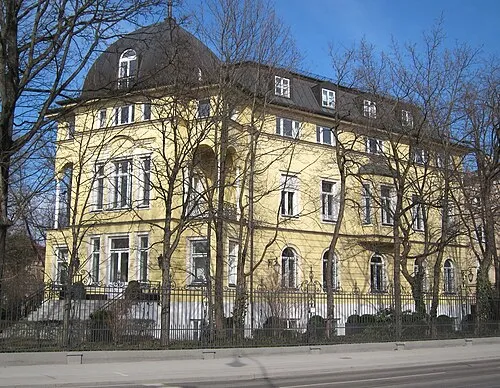 FILEDPhoto: AHert · CC BY-SA 3.0
By the numbers
- 2y 6mfrom first to latest entry on record
- 16receipts behind this story
Wirecard told investors on 18 June 2020 that its auditor, Ernst & Young, had not been able to obtain sufficient audit evidence for EUR 1.9 billion in trust account cash, about a quarter of the consolidated balance sheet total, according to the company's own disclosure. On 25 June it filed for insolvency, owing creditors almost $4 billion, Reuters reported. The cash, in between, had gone from an asset to a rumour.
What we know
- Wirecard said on 18 June 2020 that EY could not obtain sufficient audit evidence for EUR 1.9 billion in trust account cash, about a quarter of the consolidated balance sheet total (Wirecard disclosure).
- Wirecard filed for insolvency on 25 June 2020 owing creditors almost $4 billion, Reuters reported.
- Munich prosecutors charged Markus Braun with market manipulation, embezzlement and commercial gang fraud; he denies wrongdoing, per BBC and Reuters.
- Former COO Jan Marsalek is described by Reuters as an international fugitive on Europe's most wanted list whose whereabouts are unknown.
- EY has said it acted professionally, Reuters reported; a German parliamentary inquiry found failings including by EY, per BBC.
This is the timeline of how a DAX 30 member got there, who looked, who looked away, and who ended up holding the bill. Wirecard has always denied wrongdoing, the FT noted at the time, and Markus Braun denies it still.
2015 to 2019: the critics get investigated
Munich state prosecutors told Reuters that German police carried out a large-scale raid of Wirecard in December 2015 for suspected money laundering, following a request by the U.S. Justice Department. In February 2016 a 101-page report from Zatarra Research alleged the company was linked to money laundering and fraud, Reuters reported.
What followed, according to confidential documents seen by Reuters, was an investigation of the authors rather than the company. Wirecard's lawyers wrote to BaFin, the German financial regulator, on 1 April 2016 calling the matter 'very urgent', and by 12 May BaFin had sent prosecutors a report urging a criminal inquiry against 37 investors. BaFin told Reuters the trigger did not come from Wirecard and that it also investigated Wirecard.
"They persecuted the critics"
Fraser Perring, an author of the 2016 report, to Reuters, 16 July 2020
Munich prosecutors abandoned their case against Perring in March 2020, Reuters reported. By then the Financial Times had published, on 15 October 2019, internal spreadsheets that it said appeared to indicate a concerted effort to inflate sales and profits at Wirecard businesses in Dubai and Ireland. The FT said 15 of 34 clients listed as flowing through a Dubai partner called Al Alam told it they had never heard of that partner. Wirecard had charged that the FT relied on fake material; the FT rejected that on all counts.
2020: two auditors, one hole
On 12 March 2020 Wirecard said a KPMG special investigation had not produced any substantial findings requiring correction of its 2016, 2017 and 2018 accounts, Reuters reported. KPMG's own report, published in late April per the FT, said something narrower: it had not received sufficient documentation to address all allegations, and the documents it saw were almost exclusively electronic, making their authenticity impossible to verify. Braun told reporters the allegations had not been confirmed 'overall and in every point'.
Then EY, the company's auditor for a decade according to the FT, stopped signing. Wirecard's 18 June disclosure said there were indications that spurious balance confirmations had been provided to the auditor 'in order to deceive the auditor'. It added that loans of approximately EUR 2 billion could be terminated if certified accounts were not available by 19 June. Shares fell more than 60 per cent that day, the FT reported.
BDO Unibank, one of the two Philippine banks said to hold the money, said the document claiming a Wirecard account was 'a manipulated document' bearing forged signatures of bank employees, Der Spiegel reported. Braun said in a statement that it was unclear whether fraudulent transactions to the detriment of Wirecard had occurred. He resigned on 19 June.
"it is currently unclear whether fraudulent transactions to the detriment of Wirecard have occurred"
Markus Braun, statement quoted by the Financial Times, 18 June 2020
BaFin's spokeswoman said the 22 June disclosure, in which Wirecard conceded the missing EUR 1.9 billion probably did not exist, strengthened the suspicion that the balance sheet figures for 2016, 2017 and 2018 were incorrect, FAZ reported. The same day, Braun surrendered to Munich prosecutors, who accused him of inflating Wirecard's balance sheet total and sales volume with fictitious income, Der Spiegel reported. He was later freed on bail of EUR 5 million, the BBC reported, and prosecutors arrested him again on 22 July on an expanded warrant, FAZ reported.
Insolvency: who was left holding it
Wirecard joined the DAX 30 in 2018 at a valuation of €24bn. By the day of its insolvency filing, the BBC reported, its stock market value was under €400m. On 25 August 2020 the Local Court of Munich opened insolvency proceedings and appointed Michael Jaffé as administrator, who said around 730 employees' jobs had to be terminated, while 570 could stay in Aschheim.
| Who | What was reported | Source |
|---|---|---|
| Banks | Credits of 1.7 billion euros to Wirecard | Al Jazeera, citing prosecutors |
| Bondholders | Bonds worth 1.4 billion euros described as unlikely to be repaid | Al Jazeera, citing prosecutors |
| Creditors overall | Almost $4 billion owed at the collapse | Reuters |
| Shareholders | Market value from €24bn at DAX entry to under €400m | BBC |
| Eight hedge funds | Gains of as much as €740m from the share collapse, per Breakout Point | Financial Times |
| Staff | Around 730 jobs terminated | Insolvency administrator Jaffé |
The regulator and the auditor
Investors wanted to know why EY did not spot problems earlier, Reuters reported on 28 June 2020. A nine-month inquiry by German lawmakers found a succession of failings, including by EY for signing off Wirecard's accounts, the BBC reported. Reuters reported that then finance minister Olaf Scholz criticised EY for failing to detect the fraud, that EY has said it acted professionally, and that the head of BaFin and the head of Germany's accounting watchdog stepped down. Merkel and Scholz both denied they were to blame.
The Braun trial
On 14 March 2022 German prosecutors charged Braun and two other managers with market manipulation, embezzlement and commercial gang fraud in an indictment of 474 pages, Al Jazeera reported. Prosecutors said Braun received at least 5.5 million euros in dividends. The trial opened in Munich on 8 December 2022 in a bomb-proof courtroom at Stadelheim prison, the BBC reported.
Braun has denied embezzling money from Wirecard and accused others of running a shadow operation without his knowledge, Reuters reported. Co-defendant Oliver Bellenhaus is a prosecution witness; his lawyer said he wanted to admit his own guilt but wanted a clear reduction in sentence. Co-defendant Stephan von Erffa has denied orchestrating events, per Reuters. Jan Marsalek is not in the dock: Reuters describes him as an international fugitive on Europe's most wanted list whose whereabouts are unknown.
MissFortune's arithmetic: a €24bn entry ticket, a market value under €400m on the day of filing, and a EUR 1.9 billion balance that the BBC says two Philippine banks reported they had never held as a client. Where the money went is a question for the court. Reuters and the BBC expected the trial to run into 2024 at the earliest; the documents read here stop before any verdict.
The Markus Braun file
- Filed
Trial opened in Munich; Braun denies wrongdoing, the BBC and Reuters reported. This story
- Filed
Prosecutors charged Braun with market manipulation, embezzlement and commercial gang fraud, Al Jazeera reported. This story
- Reported
Braun surrendered to Munich prosecutors and was arrested on suspicion of inflating Wirecard's sales, Der Spiegel reported. This story
On file: The Markus Braun file · The Ernst & Young file · The Jan Marsalek file · The Wirecard file
The Ledger
On the record
- Wirecard disclosed on 18 June 2020 that EY lacked audit evidence for EUR 1.9 billion, filed for insolvency on 25 June, and Munich prosecutors charged Braun in March 2022; his trial opened on 8 December 2022.
Still rumour
- Braun denies wrongdoing and no verdict appears in the documents read; Marsalek's whereabouts are unknown, and where the money went is not established in them.
That's the record. The rest is rumour. - MissFortune
Next on the docket
More Money Money ·
⚖️ Cases 1000, 2000, 4000: NIS 1.8B alleged, Benjamin Netanyahu
Netanyahu denies wrongdoing in Cases 1000, 2000 and 4000. The gifts are put above NIS 700,000; no verdict is in the record read. 🗣️
 Money ·
💸 Trump border wall: $15B allocated, 47 new miles, CNN says
CNN counted 453 border-wall miles by Jan. 2021, only 47 new. How the suits against the funding ended is not in the records read. ⏳
 Money ·
⚖️ Contempt of Congress: Bannon got 4 months, Holder no charges
Holder, held in contempt 255–67 in 2012, faced no criminal charges. Bannon was convicted and jailed; he says he relied on his lawyers. 📌
 Money ·
💸 Alina Habba Mildon fired from $50M Concord deal, NYT reports
Trump called the deal 'outrageous'; the NYT says a Nov. 4 letter cites 'failure to perform duties'. Concord has yet to comment. ⏳